 Yun Hai 88 Trading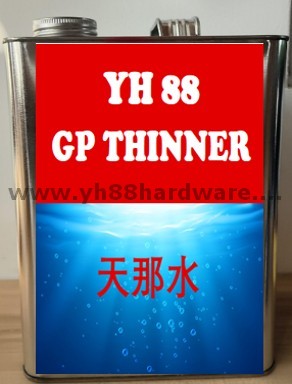
| YH 88 GP THINNER | |
| SIZE | 2KG, 10KG |
Introduction
GP Thinner is a widely used solvent in industrial, automotive, and painting applications. Known for its effectiveness in thinning paints, cleaning tools, and dissolving coatings, GP Thinner plays a crucial role in various industries. In this article, we will explore its composition, applications, precautions, and environmental impact.
What is GP Thinner?
GP Thinner (General Purpose Thinner) is a blend of volatile organic solvents designed to reduce the viscosity of paints, varnishes, and other coatings. It typically contains a mixture of acetone, toluene, xylene, and other hydrocarbon solvents, depending on the formulation.
Key Properties:
- Fast Evaporation: Ensures quick drying of paints.
- Strong Solvency: Effectively dissolves resins and coatings.
- Versatility: Compatible with many types of paints, including enamel, lacquer, and synthetic finishes.
Common Uses of GP Thinner
-
Thinning Paints & Coatings:
- Used to adjust the consistency of oil-based paints for smoother application.
- Ideal for spray painting and brush applications.
-
Cleaning Tools & Equipment:
- Removes paint residues from brushes, rollers, and spray guns.
- Helps degrease metal surfaces before painting.
-
Surface Preparation:
- Cleans surfaces before applying primers or paints to ensure better adhesion.
-
Industrial Applications:
- Used in automotive refinishing, furniture manufacturing, and machinery maintenance.
Safety Precautions When Using GP Thinner
Despite its usefulness, GP Thinner poses health and safety risks due to its volatile and flammable nature.
1. Personal Protective Equipment (PPE):
- Respirator: Use in well-ventilated areas or with a mask to avoid inhaling fumes.
- Gloves: Nitrile or chemical-resistant gloves to prevent skin contact.
- Eye Protection: Safety goggles to avoid splashes.
2. Handling & Storage:
- Keep Away from Flames: Highly flammable—store away from heat sources.
- Proper Ventilation: Use in open or well-ventilated spaces to prevent fume buildup.
- Sealed Containers: Store in labeled, airtight containers to prevent leaks.
3. Health Risks:
- Inhalation: Prolonged exposure can cause dizziness, headaches, and respiratory issues.
- Skin Contact: May cause dermatitis or irritation.
- Ingestion: Toxic if swallowed—seek medical help immediately.
Environmental Impact & Disposal
GP Thinner contains hazardous chemicals that can harm the environment if improperly disposed of.
- Avoid Pouring Down Drains: Can contaminate water sources.
- Recycle & Dispose Properly: Follow local hazardous waste disposal regulations.
Alternatives to GP Thinner
For those looking for less toxic options, consider:
- Water-Based Thinners: For acrylic and latex paints.
- Bio-Based Solvents: Eco-friendly alternatives with lower VOC content.
Conclusion
GP Thinner is an essential solvent for many industries but must be used with caution. Proper handling, storage, and disposal are critical to ensuring safety and minimizing environmental harm. Whether you're a professional painter or a DIY enthusiast, understanding its properties and risks will help you use GP Thinner effectively while staying safe.